Under the Table and Under the Radar: How Paradise Valley's Shadow Economy Actually Runs Things
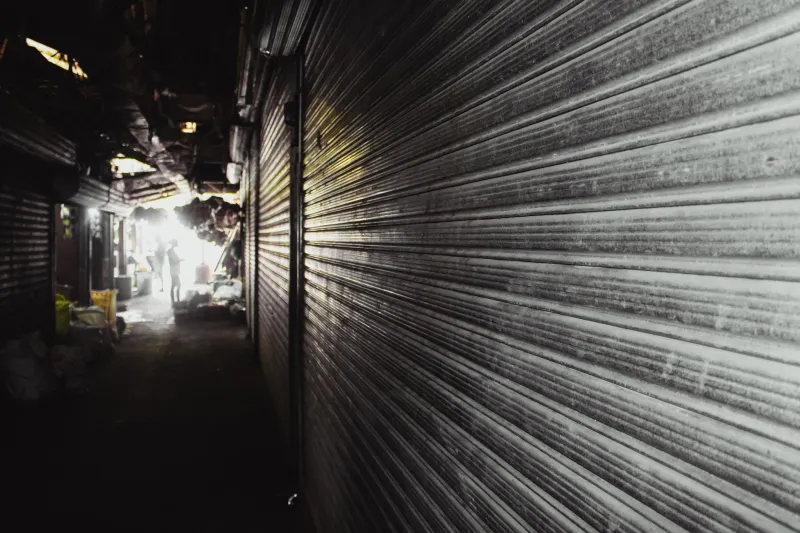
Ask any long-timer in Paradise Valley where the real action is, and they'll probably glance over their shoulder before answering. Not because they're nervous — but because that pause is part of the culture. The Valley has always had two economies running side by side. One shows up in ledgers, storefronts, and official trade agreements. The other one doesn't show up anywhere, and that's exactly the point.
This isn't about chaos or rule-breaking for its own sake. The shadow economy in Paradise Valley is a living, breathing layer of gameplay that shapes storylines, defines alliances, and reveals character in ways that clean, above-board transactions simply can't touch.
Why the Gray Market Exists in the First Place
No economy — fictional or otherwise — stays perfectly tidy. The moment a server develops official channels, licensed businesses, and regulated trade, gaps appear. Demand for things that aren't officially available. Services that exist in legal gray zones. Goods that move faster, cheaper, or more quietly through informal networks than through the front door of a registered shop.
In Paradise Valley, those gaps didn't take long to fill.
Some of it started organically. A player needed something the market didn't offer. Another player had it. A deal happened, no paperwork involved. Word spread. Suddenly there's a whole informal network built around that one transaction, and people are treating it like it's always been there.
Other pieces of the shadow economy grew as deliberate character choices — players who decided their characters wouldn't play by official rules, and built entire identities around operating outside them. Those characters tend to be some of the most interesting people in the Valley.
What Actually Gets Traded Off the Books
The informal economy in Paradise Valley isn't one thing. It's a collection of overlapping markets, each with its own logic and its own cast of regulars.
There's the information trade, which might be the oldest hustle in the Valley. Who's moving where. What a faction is planning. Which official is quietly on the take. Information brokers don't manufacture anything — they just know things and charge accordingly. Their value is entirely dependent on their reputation for accuracy, which means they tend to be meticulous in a way that surprises people who assume shady equals sloppy.
Then there's the service underground — fixers, forgers, mediators, and specialists who operate without licenses or official standing. Need a dispute settled without involving the Valley's legal system? There's someone for that. Need documentation that doesn't technically exist? Also covered. These players walk a constant tightrope between usefulness and exposure, which makes for genuinely compelling ongoing storylines.
Black market goods round out the picture. Items that are restricted, rare, or simply moving through unofficial supply chains because someone figured out a faster route. The interesting thing here isn't the goods themselves — it's the logistics. Who's moving product, through which routes, and who's getting a cut along the way? That web of relationships is where the real story lives.
The Tension Engine
Here's the thing about underground economies that makes them so valuable from a storytelling standpoint: they generate conflict automatically.
Every informal transaction carries risk. Someone could talk. Someone could get greedy. A deal could go sideways in a dozen different directions. The absence of official protections means that trust is the only currency that actually matters — and trust, in Paradise Valley, is something people spend very carefully.
That tension bleeds into everything. A character who runs an off-the-books operation has to constantly manage relationships — with suppliers, with clients, with the people who know too much, and with whoever in the official power structure might be willing to look the other way for the right price. Every one of those relationships is a potential storyline.
And then there's the pressure from the other side. Official factions in the Valley don't always love that a parallel economy exists. Sometimes they try to shut it down. Sometimes they try to tax it, co-opt it, or absorb it. Sometimes individual officials quietly participate in it while publicly opposing it — and the moment someone figures that out, the whole board shifts.
What It Reveals About Characters
The most compelling reason to engage with the shadow economy isn't the mechanics or the profit potential. It's what it shows about who your character actually is.
When the official rules don't apply, people make choices based on their real values. A character who strictly follows the law when it's convenient but quietly bends it when the stakes are personal? That's not hypocrisy — that's depth. A character who refuses to deal in the informal market on principle, even when it costs them? That tells you something too. And a character who's completely at home in the gray zone, who's more comfortable outside the system than inside it? Those are often the players who end up at the center of the Valley's most memorable arcs.
The shadow economy forces characters off the script. You can't hide behind official protocols when there aren't any. You have to decide, in the moment, what you're willing to do and what you're not — and those decisions accumulate into something that feels genuinely like a life lived, not just a role performed.
Getting In Without Getting Burned
If you're thinking about dipping a toe into the Valley's informal economy, a few things worth knowing:
Reputation is everything. There's no BBB rating for underground dealers. Your word is your brand, and burning someone in the shadow market has consequences that can follow your character for a long time.
Start small. The players who try to build a black market empire in their first few weeks usually end up making enemies faster than allies. The ones who grow into serious operators tend to do it gradually, one relationship at a time.
Know who you're dealing with. The gray market attracts all kinds — opportunists, idealists, genuine operators, and people who are specifically looking to take advantage of players who don't know the landscape. Do your reconnaissance before you commit.
Have a story reason. The most satisfying shadow economy gameplay happens when your character's involvement makes sense for who they are. Jumping in just for the Valley dollars gets thin fast. Jumping in because your character needs to exist outside the official system? That's where the good stuff starts.
The Valley Doesn't Judge, It Just Watches
Paradise Valley has never been a morality play. The server doesn't reward good behavior or punish bad behavior in any cosmic sense — it just lets stories unfold and sees where they go. The shadow economy is part of that. It's not there to be eliminated or celebrated. It's there because any world complex enough to feel real is going to have one.
The question isn't whether the gray market exists. It's what your character does when they find out it does — and whether they've got the nerve, the connections, or the principles to navigate it on their own terms.